Employee theft makes up a large share of shrink. Learn the common types, the warning signs in your data, and how to respond fairly.
—
3 min read
The short answer
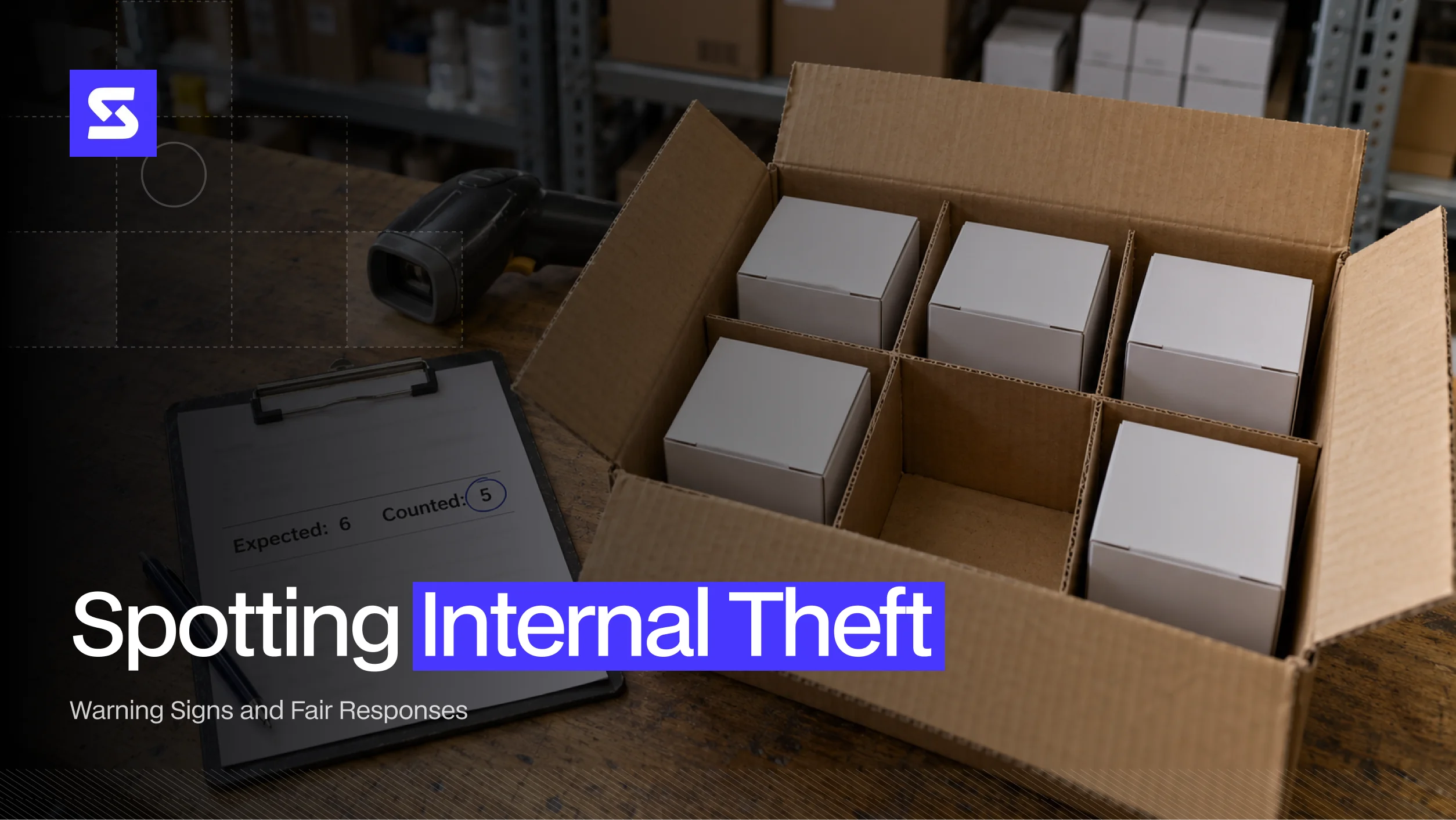
Employee theft is when someone who works for a store takes cash or stock, or uses fraud to move money their way. In the National Retail Federation's 2023 survey, internal theft made up an average of 29% of shrink, and the average loss was about $2,180 per investigated case in 2022. The best defense is clear controls, regular checks on your data, and a fair, fact based way to handle each case.
What counts as employee theft?
Taking cash from a register or a deposit
Voiding sales after the customer leaves
Entering fake refunds
Giving friends and family free items or steep discounts, often called sweethearting
Carrying stock out through a back door
Changing counts to cover a gap
Most of it is small and repeated, not one big event. That is part of why it goes unseen.
Why does it happen?
Usually it comes down to opportunity plus weak checks. A person sees that nobody reviews refunds, or that the back door is rarely watched, and a bad choice becomes easy.
Most employees never do this. A good system protects them too, because it clears honest people quickly when something goes missing.
What are the warning signs?
Look at patterns in your data first. They tell you more than gossip does.
One person with far more voids or refunds than their coworkers
Register shortages that line up with the same shifts
Inventory gaps that follow one schedule
Discounts or price overrides that cluster around the same few people
A warning sign is a reason to look closer. It is not proof. Plenty of patterns have innocent explanations, so check before you conclude anything.
How should a store respond?
Gather facts quietly. Records, timestamps, and video if you have it.
Keep it private. Never accuse anyone on the sales floor.
Bring in HR and legal early. Each case should follow your written process.
Document each step. Dates, what was found, and who was told.
Treat everyone the same way. Fair handling protects your people and your company.
How do you cut the risk to begin with?
Split duties so no single person controls a full cash cycle
Count cash with two people
Review voids, refunds, and overrides on a schedule
Write a clear policy and walk new hires through it
Offer an anonymous way for staff to report concerns
Where does AI video fit?
Registers, stock rooms, and loading areas are where most internal losses happen, and they are hard to watch all day. Spacture AI uses the cameras you already have to detect theft and fraud in real time and send alerts to the right person. The goal is to give a human a reason to look, not to replace human judgment.
Frequently asked questions
How much does employee theft cost?
The 2023 NRF survey reported an average of about $2,180 per investigated internal theft incident in 2022. Your own numbers matter more, so track them.
Do employees need to know about cameras?
Rules vary by location, so check with legal counsel. Clear signs and a written policy are a good habit either way.
What is the first thing to check if I suspect a problem?
Start with your register and refund reports. They are often the quickest way to see whether a pattern is real.
Key takeaways
Internal theft is usually small and repeated. Watch the data, set clear controls, and keep every case fair and documented.